Hall of Knowledge
Sensitivity Training
Why Feeling Is Faster Than Seeing
The Secret Behind Sensitivity Training in Chow Gar Praying Mantis Kung Fu
If you’ve ever wondered how great martial artists can react so quickly — almost before their opponent even moves — the answer is sensitivity.
In Chow Gar Southern Praying Mantis Kung Fu, sensitivity is one of the most important things you can train. It’s what helps you block, counter, and control your opponent without needing to see what they’re doing.
Here’s how it works — and why it might just be the most powerful skill in your entire training.
What Is Sensitivity Training?
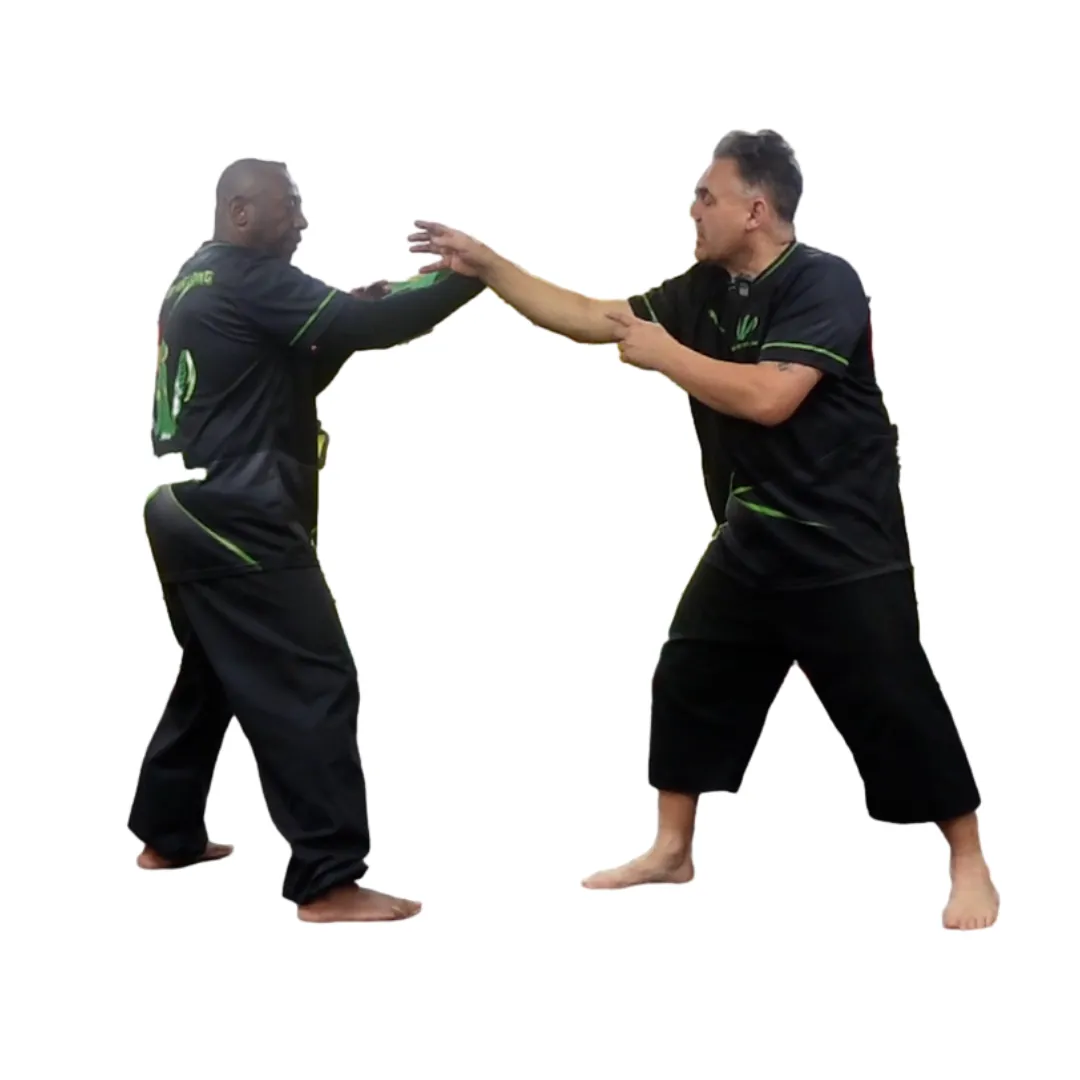
Sensitivity training means learning to feel your opponent’s energy and movement through touch, not sight.
Let’s say you and your opponent’s arms are touching — and he starts to move. With good sensitivity, your body will pick it up immediately, and you’ll react automatically — without thinking, without looking.
That’s the goal of sensitivity training:
🔸 To react instantly
🔸 To control your opponent’s balance and movement
🔸 And to stay one step ahead at all times
Why Seeing Is Too Slow
At close range, there’s no time to watch your opponent and then decide what to do. By the time your eyes see it, it’s already happening.
Instead, Chow Gar trains you to respond through touch.
Your arms and body learn to feel pressure changes — just like how you’d pull away if someone touched you with something hot. You don’t think about it — you just move.
That’s what makes this system so effective in real fighting.
What Sensitivity Training Looks Like
You’ll often hear words like:
Chi sau (sticky hands)
Chi chong (sticky forearms)
Baat doon kui sau (destruction hands)
Two-man drills (partner exercises)
These are just different ways to practice reacting to contact — learning to deal with pushes, pulls, traps, strikes, and sudden changes.
Think of it like learning to “speak” through your arms. When you touch your opponent, their energy tells you what they’re about to do. And you learn to read it — and stop it.
Forward Energy: Always Moving In
Chow Gar also teaches something called forward energy. This doesn’t mean charging like a bull — it means applying smart, constant pressure that keeps your opponent uncomfortable.
This pressure:
Breaks their balance
Stops their attack before it starts
Helps you feel exactly when and where they’re weak
When done right, it’s like slicing through soft butter. Powerful, but smooth and controlled.
What Happens When You Train Sensitivity Regularly
The more you practice, the more automatic it becomes.
You’ll start to:
✅ React without thinking
✅ Block punches without seeing them
✅ Feel when your opponent is about to move
✅ Control your partner even if they’re stronger or faster
That’s the real goal — to be in control, even when things get chaotic.
But What About Real Pressure?
Here’s the truth: it’s easy to feel good during light practice. But when the pressure’s on — when someone’s fast, strong, and unpredictable — that’s when your training gets tested.
That’s why good sensitivity drills also include:
Contact under pressure
Speed changes
Traps, redirections, and fake-outs
Continuous motion, not static techniques
The idea is to train like you fight, so that in a real situation, your body already knows what to do.
Final Thought: Train the Feel, Not Just the Form
In Chow Gar Southern Praying Mantis, forms are important. But it’s the feeling — the ability to sense and respond — that makes you dangerous.
Sensitivity training turns your bridge arm into a radar system.
It helps you stay relaxed, confident, and sharp.
And it teaches you how to fight without panic, without hesitation, and without needing to see.
So the next time you train, remember this:
“The hands see faster than the eyes, and the body knows before the brain.”